
London’s Royal Parks are overhauling their planting strategy to address climate change, moving away from traditional Victorian designs toward resilient, visually striking schemes that prioritize heat tolerance, drought resistance, and bold aesthetics. The Royal Parks charity has introduced its first unified Horticulture Vision, a detailed plan to transform the eight parks under its management—including Hyde Park, Kensington Gardens, Greenwich Park, and others—with species better suited to London’s increasingly extreme weather patterns.
The initiative responds directly to the city’s heat island effect, which has created conditions resembling those of the Mediterranean. Rising temperatures, milder winters, and unpredictable rainfall have rendered conventional planting methods ineffective. Head gardeners from all of the Royal Parks sites have been instrumental in informing the Vision, both through their contact with the public and their understanding of the requirements of the parks and how they are changing. “We can’t keep doing this volume of bedding. And we can’t. So they’ve helped shape a lot of it.” The new strategy abandons the familiar Victorian-era plant palette in favor of exotic, hardy species rarely seen in UK gardens.
A core principle of the plan is “unapologetic planting”, a deliberate effort to counteract plant blindness—the tendency for visitors to overlook individual species in favor of generic “greenery.” The parks will now feature striking displays, such as fragrant wisteria tunnels and sweeping rivers of blue flowers, designed to captivate and educate. “The really exciting thing for me is I think the opportunity we have to keep people noticing plants, to fight this phenomenon known as plant blindness, where people just see greenery, but they don’t actually notice plants,” says Pottage. “We have this opportunity.
And so a big part of it is what we’re calling everyday wonder. So we are going to be putting on theatre, bit of showmanship, wow factor. And because of the scale of the parks and the scale of the horticultural areas where they demand confident planting.”
Bold new designs for London’s iconic gardens
The most immediate transformation will occur in Hyde Park’s Rose Garden, where traditional hybrid teas and manicured lawns will give way to Rosa persica, a drought-resistant rose native to the Middle East. The garden will incorporate 20,000 diverse plants and up to 100,000 bulbs in pink and purple tones, framed by a winding new path.
A pergola, replanted with long-flowering wisteria, will become London’s longest floral tunnel. “The Rosa persicas will just make it completely different to our other two rose gardens. And then after that point, we don’t need any more rose gardens. There’s so many other types of horticulture and plants we can showcase,” Pottage says. “So it’s being a bit brave and having the courage to say, we don’t need to do any more of that, pull it out, do something different.”
In The Green Park, a tribute to the lost River Tyburn will take shape through a snaking river of blue camassia bulbs, a resilient perennial. Over 100,000 bulbs will bloom for the first time in April 2027, visually connecting visitors to the park’s buried waterway. Meanwhile, Kensington Gardens’ Italian Gardens, originally a gift from Prince Albert to Queen Victoria, will be replanted with heat-tolerant species, including Chilean wine palms flanking the ornate pumphouse. Pools will feature waterlilies and lotus, restoring the space’s historical splendor.
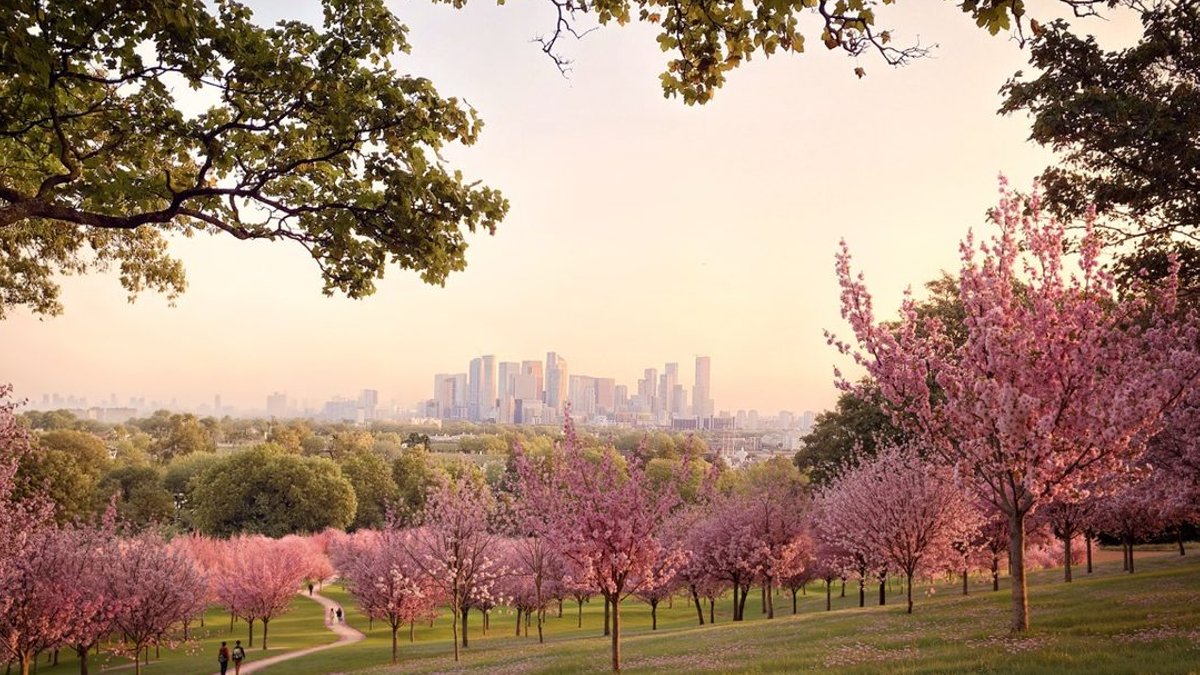
Greenwich Park’s valley of blossom, currently under construction, will expand a modest cherry blossom path into a hillside lined with 150 pink flowering cherries. As the trees mature, the park aims to create displays comparable to Japan’s iconic cherry blossom sites. The changes embody the vision of “bigger and bolder but it’s also more sustainable,” says Matthew. Funding details remain under development, with updates available at royalparks.org.uk.
Challenging visitor habits with climate-smart planting
The new approach goes beyond survival—it redefines visitor expectations. While past schemes relied on predictable, low-maintenance designs, the future will emphasize drought-tolerant exotics, seasonal variety, and immersive experiences. The challenge now is whether Londoners will recognize the transformation or if the parks will finally overcome the plant blindness that has long overshadowed their horticultural efforts.
A key feature of the transition is the wisteria pergola in Hyde Park. Unlike traditional varieties, the selected species produces exceptionally long flowers, extending the tunnel effect well into autumn. Gardeners have already begun removing hybrid teas, a process expected to take several months. The first Rosa persica cuttings are scheduled for planting in early 2027, with full bloom anticipated by spring.
The strategy also introduces a seasonal calendar to ensure year-round interest. Unlike traditional methods that relied on brief color bursts, the revised plan features staggered blooms, early spring bulbs like blue camassia in The Green Park, followed by summer perennials, and autumn displays from Rosa persica and wisteria. Gardeners will prioritize species with extended flowering periods, reducing the need for frequent replacements.
Behind the scenes, the charity is retraining staff to manage the new climate-resilient species. Head gardeners across the eight parks have already tested drought-tolerant plants under London’s changing conditions. Some traditional favorites, including hybrid tea roses, will be phased out entirely, replaced by Rosa persica and other hardy varieties. The transition requires careful coordination: removing established plants, preparing soil for new root systems, and adjusting irrigation.
Engaging the public through education and participation
The Horticulture Vision includes interactive elements to deepen public engagement. Informational signage will highlight each species’ origins and resilience, while QR codes will provide care tips and historical context. For instance, the Chilean wine palms in Kensington Gardens will include plaques explaining their adaptation to arid climates, a parallel to London’s future.
Volunteer programs will expand to include planting workshops and guided tours focused on climate-adapted horticulture. The Royal Parks charity has partnered with local schools for bulb-planting events, particularly for the camassia river in The Green Park.
Construction timelines vary by project. The Greenwich Park valley is already underway, with cherry trees planted in autumn 2026. The camassia bulbs in The Green Park will be installed by winter 2026, with their first blooms expected in April 2027. The Kensington Gardens overhaul will begin in 2027, with Chilean wine palms and water plants taking center stage by 2028. The charity expects the full transformation to unfold over five years, with phased rollouts ensuring minimal disruption to visitors. Progress updates, including planting schedules and volunteer opportunities, will be posted on royalparks.org.uk.


