
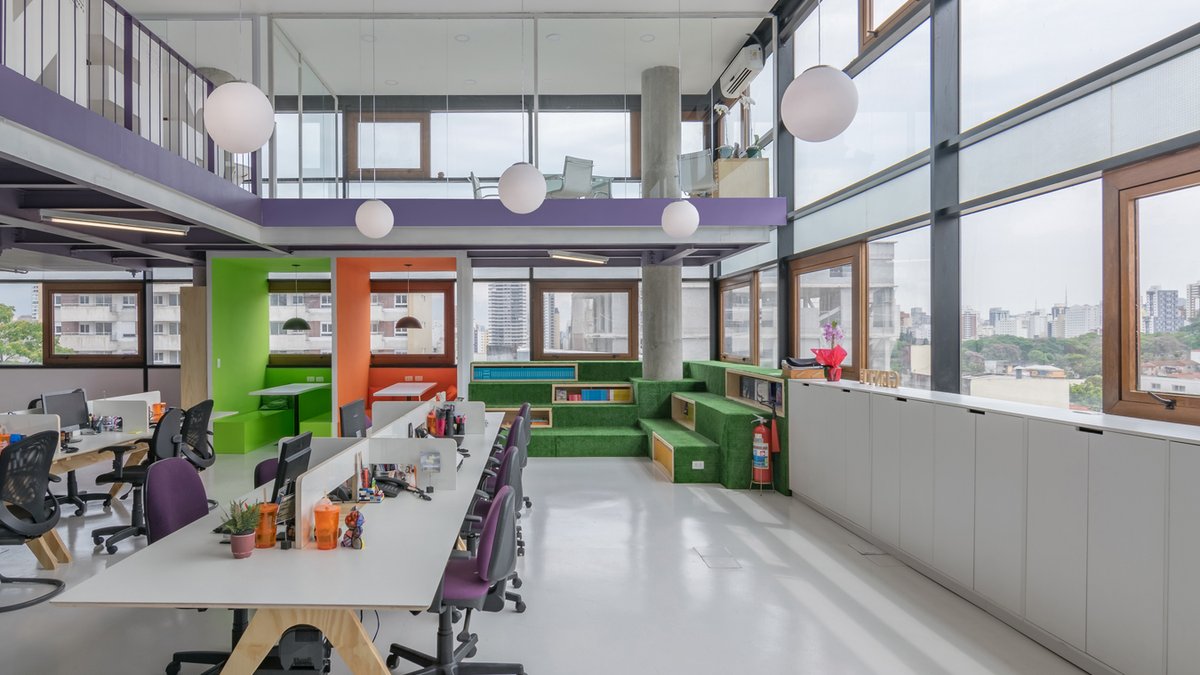
Office colour schemes have moved beyond branding and visual appeal to directly impact employee wellbeing, productivity, and how workspaces function. This change aligns with broader trends in workplace design, particularly as hybrid work models redefine what offices must deliver.
Historically, colour selections focused on corporate branding or decorative preferences. Now, standards like the WELL Building Standard and BREEAM certification require designers to assess colour as part of a holistic approach to health and occupant comfort. Instead of uniform colour schemes, modern offices use varied palettes tailored to specific functions. Bright, stimulating hues energise collaboration spaces, while neutral tones in focused work areas minimise distractions and support concentration.
The need for flexible design stems from offices now serving multiple purposes throughout the workweek. A single colour solution is no longer effective. Instead, colour helps shape distinct experiences that match both the space’s intended use and the needs of its occupants. For instance, Editora Gente’s São Paulo headquarters uses colour zoning to reinforce different activities and moods across the office.
Creating environments that support connection and comfort has become a priority. With hybrid work reducing in-office time, offices must offer what employees cannot easily replicate at home—welcoming, interactive spaces that justify physical presence. This demand has led to softer, more residential-style colour schemes designed to strengthen a sense of community. However, colour alone does not determine success. The most effective designs combine it with materials, lighting, and textures to create cohesive, functional environments.
Nature-based colour palettes, shades of green, blue, and earth tones, remain widely adopted, reflecting biophilic design principles aimed at deepening the connection between people and their surroundings. Yet the effectiveness of these choices depends on how they interact with other design elements. A carefully selected wall colour may fail to produce a calming effect if paired with harsh lighting or rigid furnishings.
Research also highlights how colour influences cognitive and emotional responses. These findings reinforce the idea that colour is not just an aesthetic choice but a tool for intentional workplace design.


