
Steelcase recently compiled fresh research on how workplace design can boost mental efficiency. For most employees, the mind represents their greatest professional resource, driving imagination, education, judgment and interpersonal links. Nevertheless, many treat it like a computer program, demanding peak output continuously. In truth, the brain is a living organ that reacts to surrounding conditions. Ambient sound, visual clutter and pressure can sap mental capacity, hindering concentration and clear thought.
Visual Privacy for Better Focus
Keeping attention steady has grown more challenging within modern offices. Workers continuously encounter overlapping dialogues, motion and visual input that vie for their notice, raising mental strain. A study jointly carried out by Steelcase and the Center for Healthy Minds, University of Wisconsin-Madison, demonstrated that providing visual privacy markedly enhances prolonged focus.
Test subjects stationed in partially enclosed areas outperformed those in fully open settings on attention-based exercises, despite identical sound levels. Introducing privacy partitions, shielding structures and dedicated focus zones enables firms to safeguard users’ concentration and preserve cognitive stamina for important tasks.
Create Opportunities for Cognitive Offloading
The mind cannot retain all data simultaneously. Individuals achieve higher performance when they externalize concepts and render thought processes observable. Tools such as whiteboards, pin-up boards and shared project zones facilitate this by letting groups record, arrange and review content. Referred to as cognitive offloading, the practice eases the load on short-term memory, freeing bandwidth for analysis, invention and problem resolution.
Tangible settings also offer benefits that virtual applications frequently lack. When several concepts are shown at once in a physical space, groups can more readily spot trends, links and possibilities.
Support the Brain Through Movement
Physical motion contributes significantly to mental output, though it is frequently ignored in office planning. Research indicates that bodily activity bolsters focus, recall and judgment. Environments that prompt occupants to alternate among sitting, standing, perching or moving during the day can sustain vigor and involvement. Desks with adjustable height, standing teamwork areas and dynamic seating options provide users with broader autonomy and adaptability, promoting both mental and bodily activation.
Build Spaces for Connection and Recovery
Although concentration remains vital, creativity also depends on interpersonal links. Communal areas, coffee spots and community hubs support chance encounters, information exchange and relationship development. Such moments cultivate trust, teamwork and psychological security—key components for inventive outcomes.
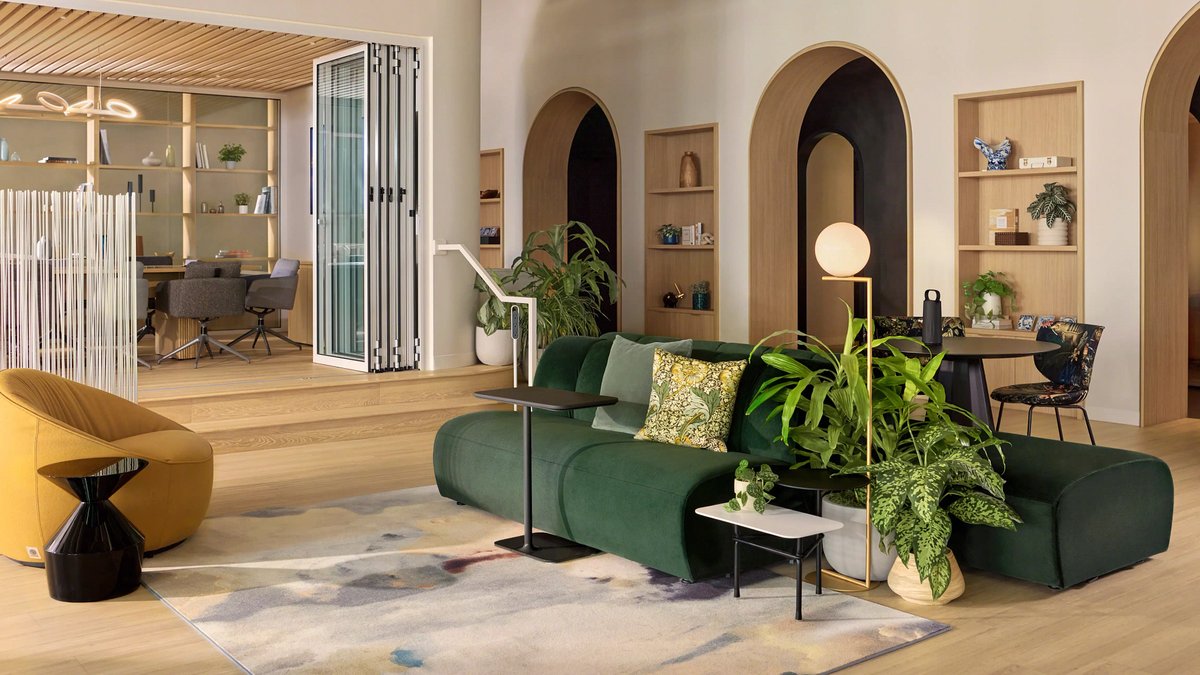
Concurrently, individuals require chances for recuperation. Uninterrupted focus cannot be maintained indefinitely, and the mind gains from periodic renewal during the day. Tranquil lounges, retreat zones, and settings featuring organic materials aid in lowering tension and promoting health. Features like timber, natural textures and soothing hues generate environments where workers can rejuvenate prior to resuming concentrated tasks.
Designing for the Future of Work
As artificial intelligence progressively assumes repetitive duties, distinctly human skills, including imagination, analytical reasoning and teamwork, will grow in importance.
The most successful offices will be judged not by desk counts but by how effectively they nurture thinking, concentration and creativity. By shaping spaces that shield focus, lessen mental strain and promote health, companies can enable individuals to reason more clearly,


