
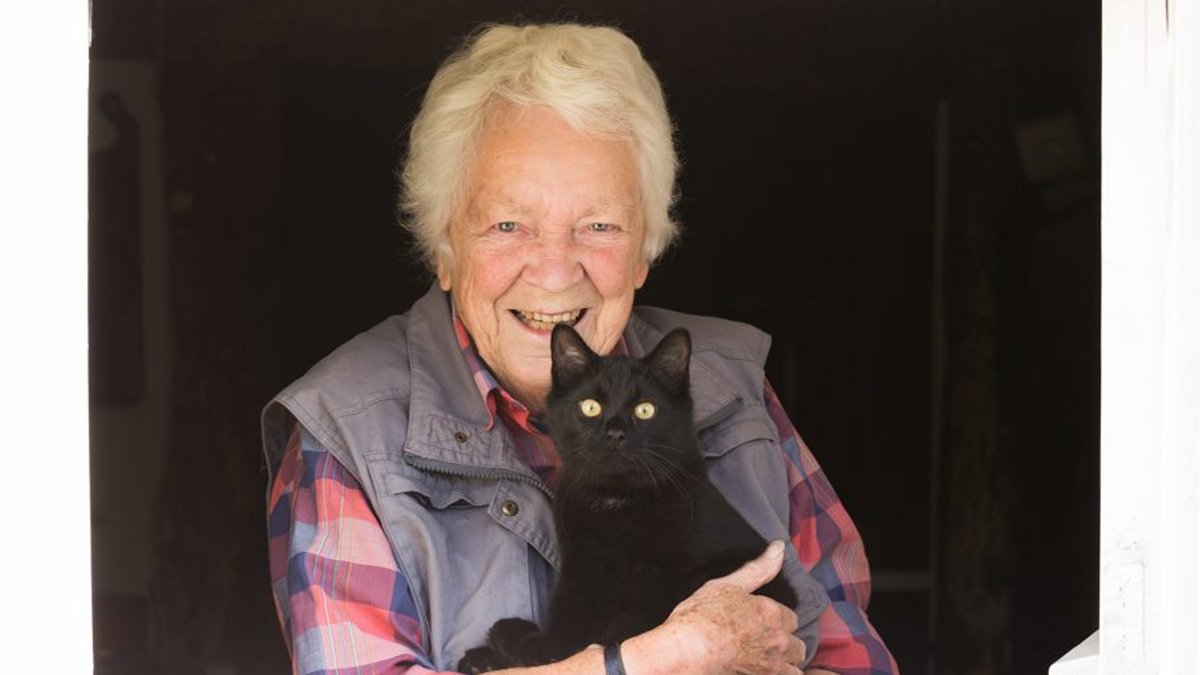
Elizabeth Strangman, the plantswoman who shaped modern hellebore breeding and ran Washfield Nursery in Kent for decades, has died. The horticulture industry remembers her as a force of nature—determined, outspoken, and deeply knowledgeable, with a passion for plants that began in her youth.
Born in 1936 in Lavenham, Suffolk, she spent her childhood exploring chalky meadows near home during World War II. With little else to occupy her, she borrowed an old bicycle and a copy of Flowers of the Field to spend hours identifying wildflowers. “I used to borrow an old bike, a copy of Flowers of the Field and go off for hours, exploring,” she later said. “It was war time and there was nothing much to do in the countryside, but I loved it.” After leaving school, she converted her schoolgirl enthusiasm for botanising into the beginnings of a career, first by working at the Cambridge University Botanic Garden and then by spending a year at the Studley Horticultural & Agricultural College for Women in Warwickshire, which was one of only two colleges accepting female students in horticulture.
Her father’s suggestion to help redesign their family garden in Lavenham led to a plant-buying trip to Washfield Nursery in 1961. There, she met Hilda Davenport-Jones, who ran the nursery. Strangman soon joined the team, where she began breeding hellebores—a pursuit that would define her professional life. Within three years, she had developed new strains of purple Helleborus orientalis with richer colors and fuller blooms, achievements that set her apart in the field.
By the 1960s, she was already expanding the possibilities of hellebore cultivation. Her focus shifted to refining colored orientalis types, breeding for hues like pink, plum, green, and even slate-black. This work made hellebores more widely accessible, transforming them from a niche, expensive flower into a dependable garden staple.
When Davenport-Jones passed away in 1968, Strangman took over Washfield. Her partner, Peggy, had played a key role in building the nursery’s reputation, but Peggy’s death in 1980 left her deeply affected. Still, she returned to work with renewed intensity, sustained by simple marmalade sandwiches and an unshakable drive. By the late 1970s, the nursery’s influence had grown, and she traveled to Bosnia and China to collect seeds and hunt for rare specimens.
Read Also: Chelsea Flower Show reveals People’s Choice winners
How Bosnia transformed hellebore breeding
One of her most important discoveries came during her trip to Bosnia, where she found a double form of Helleborus torquatus. This led to the development of the Party Dress Group of hybrids, including the striking H. torquatus ‘Dido’ and ‘Aeneas’, known for their dusky green-purple blooms. Her breeding work didn’t just create new plants—it redefined the potential of hellebores altogether.
Strangman’s impact extended well beyond her nursery. She became a familiar figure at plant fairs, particularly at Great Dixter, where she mingled with crowds, offering advice and sharing her enthusiasm. “She wandered about picking up treasures, making judgements and giving opinions; comfortable and an integral part of what she felt was her tribe,” Flint recalled. Her generosity was well-known; visitors often left with cuttings, seeds, or bulbs, their pockets filled with treasures she insisted they take.
After suffering a stroke in 1999, she closed Washfield and moved to a 15th-century cottage in Robertsbridge, East Sussex. There, she created a garden by the River Rother, where hellebores, snowdrops, and cyclamen thrived in carefully arranged borders. But in 2000, the river flooded, submerging the house in six feet of water. Most of her plants survived, and Strangman, as always, carried on.
Her garden at Robertsbridge became her new focus. “A Botticelli primavera in the spring; carpets of crocus studded with hellebores and precious snowdrops, sheets of cyclamen, all artfully but perfectly placed. In summer, her borders billowed with softly graded colour; nothing brash, coarse or abrasive. In the autumn, shimmering seedheads and delicate skeletons. It was her great joy. A joy she willingly shared with students, friends and even, on occasion, grabbing the odd stranger off the street to come and share in her delight,” Flint described.
A gardener’s generosity reshaped horticulture culture
Strangman’s legacy endures through the gardeners she inspired. Jodie Jones, who profiled Strangman in recent years, described her as “an exceptional nurserywoman and one of the most inspiring gardeners I have ever met.” Jones noted that Strangman would refuse to sell a plant to anyone she suspected wouldn’t care for it, but she was also kind and funny and so very generous with her knowledge. At her funeral the church was full of nursery people paying their respects to one of their best.
Read Also: Historic Edinburgh Palm Houses reopen after restoration
The Studley Horticultural & Agricultural College for Women, where Strangman studied after Cambridge, was one of only two British institutions at the time that admitted female students to horticultural programs. Her time there sharpened her technical skills, but her independent nature set her apart.
Her early work at Winkfield Place under Constance Spry introduced her to the commercial side of horticulture. She worked there for a year, but said of the experience: “I was always in trouble for doing things my way.”
Why seed-raised hellebores became her signature
Her breeding methods at Washfield were unconventional. Unlike many nurseries that relied on grafting or cuttings, she insisted on seed-raised strains, believing they produced hardier, more variable offspring. This approach required patience, some crosses took years to stabilize, but it resulted in hellebores with deeper colors and stronger constitutions.
The Party Dress Group hybrids, developed from her Bosnian discovery, were among her most celebrated works. Unlike the delicate, single-flowered types common at the time, these hybrids featured layered petals and a velvety texture that made them stand out in winter borders. Gardeners noted how the dusky tones of ‘Dido’ and ‘Aeneas’ softened harsh light, while their late-season blooms extended interest well into spring. Strangman never protected her work with patents, instead offering cuttings freely to fellow breeders, even competitors, if she believed they would be well used.
The 2000 flood tested more than her garden. It destroyed years of correspondence, including letters from plant hunters and colleagues. Strangman spent weeks drying and salvaging what she could, but some losses, like a series of sketches of rare Helleborus species, could not be recovered. Yet within months, she had replanted the borders with new acquisitions, labeling them with the names of friends who had helped during the cleanup. The garden’s recovery mirrored her own resilience.


