
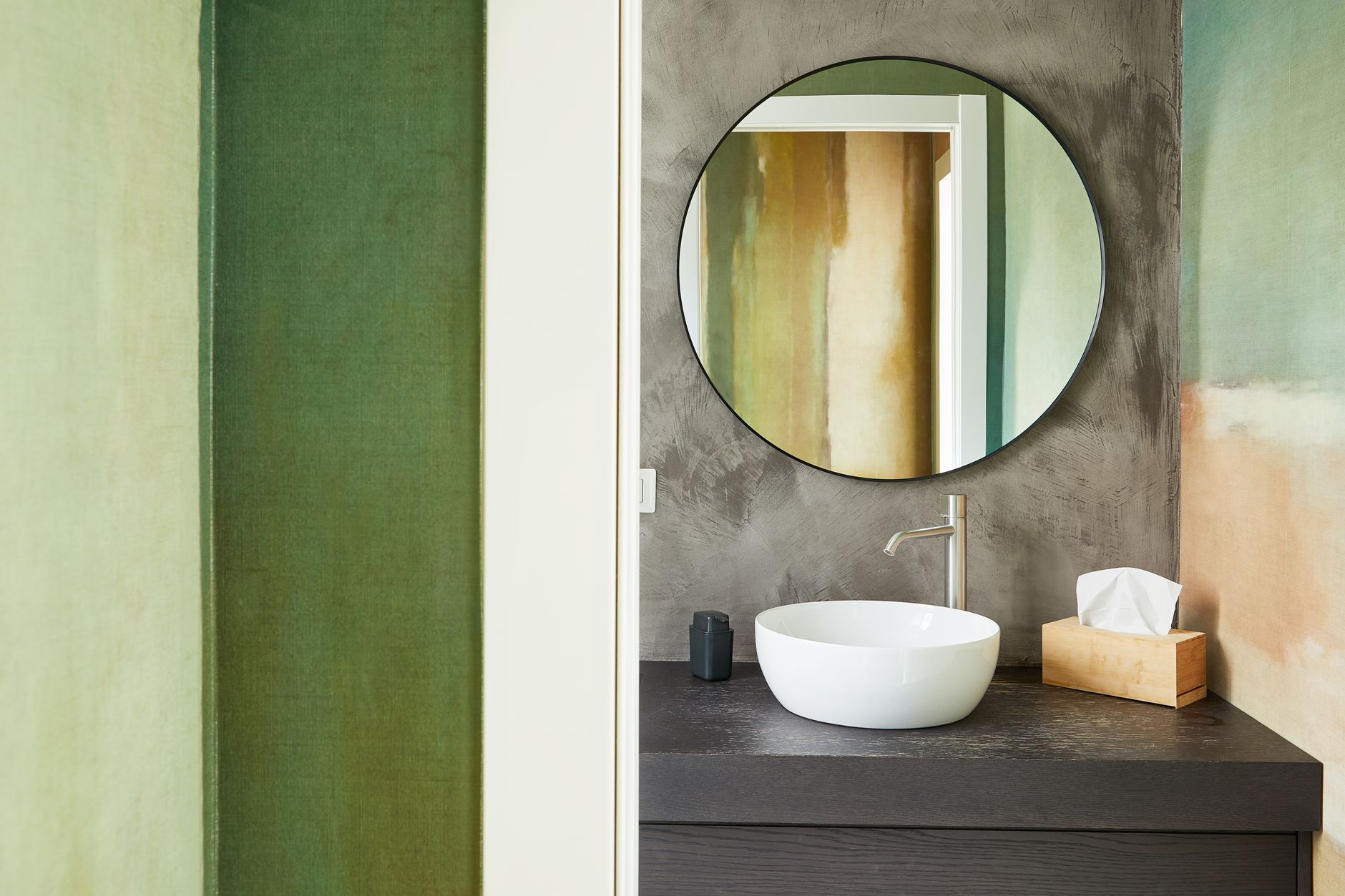
Choosing the ideal basin and tap placement in a bathroom can prevent the “head‑butt effect,” a common complaint when water splashes onto the floor or hits the user’s forehead.
Size, shape and height matter
Experts agree that basin dimensions influence how much water spills during a face‑washing routine. Martin Carroll, managing director at Duravit UK, notes that a countertop basin should be at least 40 cm wide and 20 cm deep. “At this size, splashing and overspill is kept to a minimum,” he says. A typical installation height of 85–90 cm works well for most users.
Shape also plays a role. Benjamin Peak, co‑founder of Varied Forms, recommends a basin with a wide, gently sloped interior to avoid sharp corners that can fling water outward. Ruth Davies, marketing director at VitrA, suggests oval or rectangular basins because their softer outlines and larger surface area give a more comfortable experience when leaning over the bowl.
While some designers favor inset or semi‑inset basins, many installers still prefer countertop models for their accessibility. Wall‑mounted basins are an alternative, provided they are positioned at the correct height to match the user’s ergonomics.
Related: Waterfall Kitchen Islands Offer Style and Function
Tap design and positioning
Tap placement is equally important. Jorge Hernandez, group head of design at Crosswater, says a single‑lever mixer offers effortless temperature control and that a medium‑height spout gives enough clearance to keep water from splashing out of the basin. The water stream should land at the deepest point of the basin.
David Boddy, product manager at Abode, adds that a tap should minimize the need to bend down while washing the face, improving ergonomics and reducing the chance of water hitting the floor. The projection ought to be about one‑third of the way into the basin, allowing the remaining two‑thirds to stay open for a comfortable wash.
Some taps feature pivoting aerators or swivel spouts, letting users direct the flow farther forward and keeping the fixture out of the way. These designs can further lower the risk of accidental head contact.
From a broader perspective, the placement of the basin and tap influences overall bathroom traffic flow. When fixtures are positioned at comfortable heights and distances, users can move more efficiently, which is especially valuable in smaller spaces where every inch counts.
Related: Understanding Construction Loans: A Complete Guide for Builders and Homeowners
Choosing a wall‑hung vanity with a built‑in basin creates a barrier between the bowl and the floor, making cleanup easier. Nancy Emery of Drench points out that such units also provide additional countertop space for storage, keeping toiletries organized and out of the way.
Brands like Varied Forms showcase wall‑mounted basin taps in warm brass finishes, while Duravit’s Balcoon range emphasizes a pared‑down aesthetic that blends warmth with accessibility. These options illustrate how functional design can also meet style preferences.
Overall, a suitably sized, shallow‑depth basin placed at 85–90 cm height and a tap that delivers water to the basin’s deepest point, preferably with a single‑lever mixer and a medium‑height spout, tends to reduce splashing and improve user comfort.


