
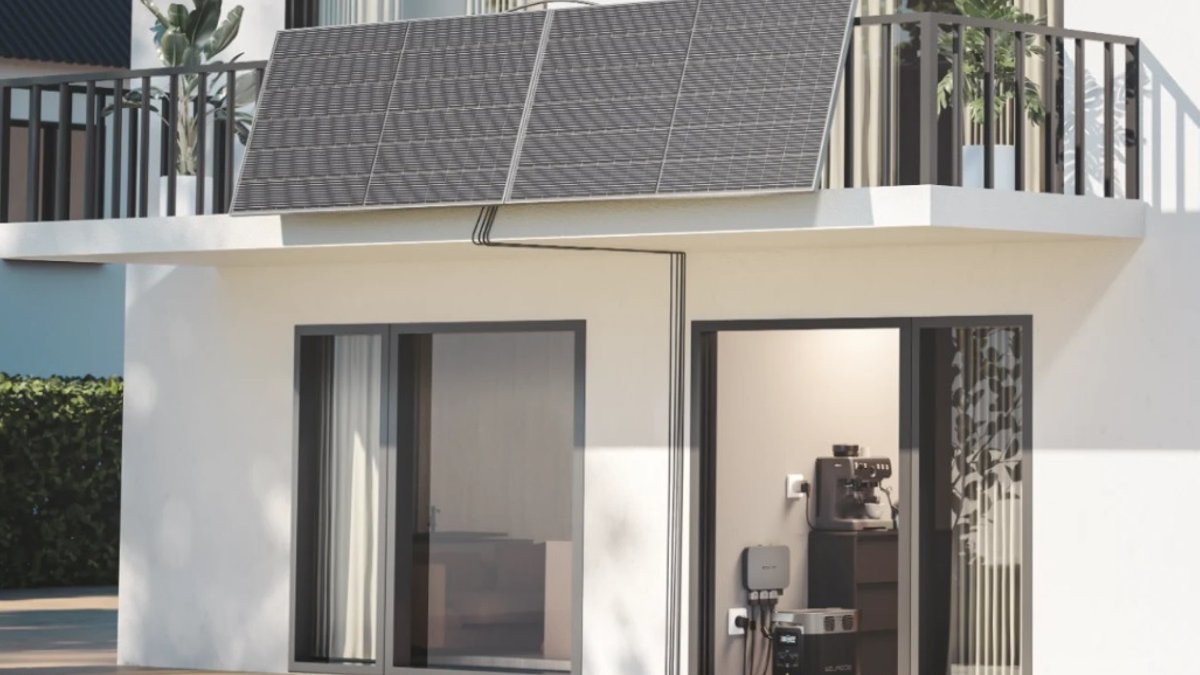
For large-scale solar projects, it’s best to leave them to the professionals. But if you’re looking to harness the power of the sun on a smaller scale and do it yourself, there are plenty of options available. From solar-powered garden lights and security cameras to solar sheds and balcony systems, there’s a DIY solar project to suit every skill level and budget.
Understanding Solar Power
Before diving into DIY solar projects, it’s helpful to understand how solar power works. Solar panels are made up of photovoltaic cells, which are semiconductors like silicon. When sunlight hits these cells, it releases electrons that flow as electricity. This electricity can be used immediately or stored in a battery for later use.
Solar panels work best when exposed to direct sunlight and when oriented as flat to the sun as possible. While they can still produce some power on cloudy days or with indirect light, having a battery on hand can help store excess energy for later use.
Related: Historic 18th-Century Granary Restored to Former Glory
DIY Solar Projects
One of the simplest DIY solar projects is installing solar-powered garden lights. These range from functional stake and wall lights to decorative strings and lanterns. While cheaper options may not be particularly bright or long-lasting, more expensive lights with larger solar cells and batteries can provide better performance and additional features like motion activation or smart capabilities.
Solar-powered security cameras are another popular option for DIY solar projects. These cameras are ideal for areas where mains cabling isn’t an option, such as long driveways or the far side of a garden. Many of these cameras come with a combined mount for the panel and camera, which can be converted to separate mounting for optimal positioning.
For those looking to power more than just lights and cameras, solar-powered battery power stations are a great option. These portable units combine battery storage with USB and mains outputs, providing a flexible source of power for outbuildings like sheds or garages that aren’t wired into the mains.
When choosing a battery power station, it’s important to consider the peak power needed for your devices and the amount of energy you’ll need to store. Entry-level power stations may not be able to deliver high peak power or store a lot of energy, while more expensive options can provide higher peak power and greater energy storage capacity.
Related: Renovation Mistakes to Avoid
Solar charging for battery power stations can be practical but comes with its own set of considerations. It’s important to choose solar panels that won’t exceed the power station’s maximum input power and voltage. Mounting solar panels on a shed or garage roof or wall requires a proper frame or rail system that’s anchored securely and weatherproofed. Additionally, it’s key to follow proper safety precautions when working at height and be aware of the potential for asbestos in roofs built before 1999.
For those interested in connecting solar panels to their home’s mains electricity supply, things quickly become more complex. Grid-tied setups require approved equipment and notification to the distribution network operator. There are simpler ways to use solar energy in your home, such as balcony systems that combine portable solar panels with a battery power station to provide solar-powered mains and USB ports for household gadgets.
While DIY solar projects can be a great way to lower emissions and save money on energy, it’s important to do your research and choose the right project for your needs and skill level. With a little effort and the right equipment, you can harness the power of the sun and enjoy the satisfaction of creating your own clean, free electricity.


