
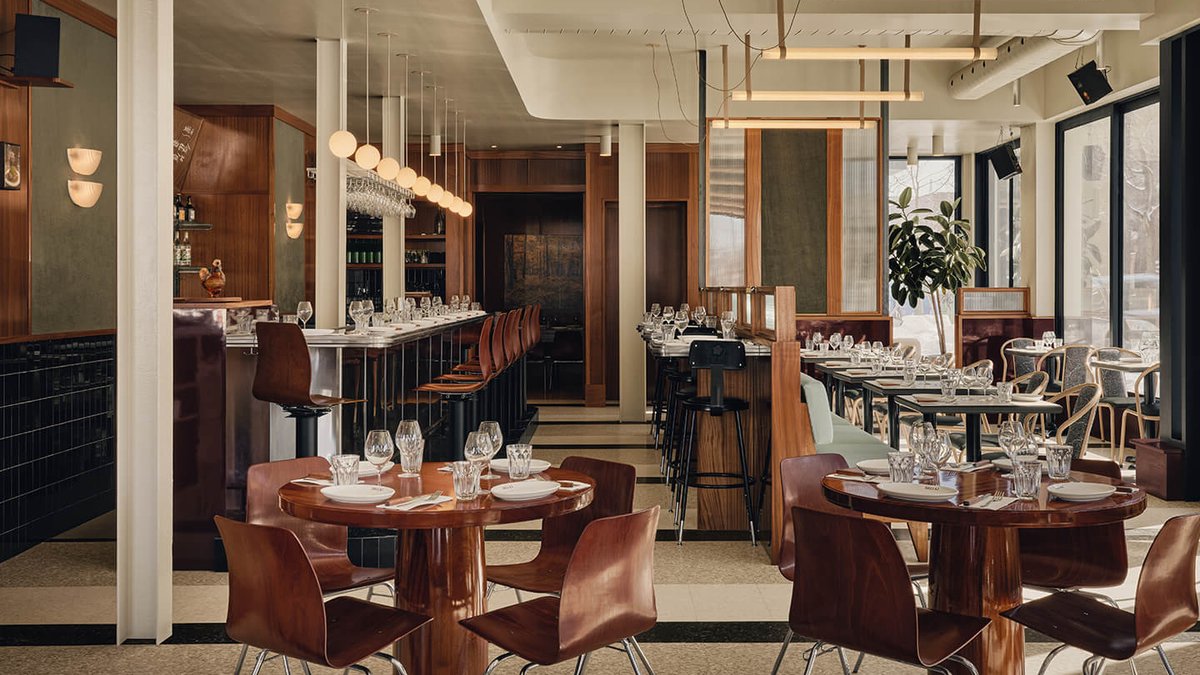
Montreal’s dining scene has gained national attention, but the city’s culinary reputation is not solely defined by the food on the plate. The city is home to 28 of the country’s top 100 restaurants in 2026, a figure that surpasses Toronto and Vancouver, and much of this success can be traced to the physical spaces where meals are served. A key figure behind this visual transformation is Zébulon Perron, a local hospitality maven whose design atelier has shaped some of the city’s most recognizable venues.
Design as a Service
Perron’s influence extends across a wide spectrum of establishments, ranging from the swanky Marcus restaurant at the Four Seasons to Papito, a Portuguese spot that emphasizes upcycling and uses minimal new materials. The firm rejects the idea that high-end design requires expensive or flashy materials, instead focusing on functional and accessible solutions.
The firm’s portfolio includes Vin Mon Lapin, a wine bar in Little Italy that climbed to sixth place on Canada’s 100 Best list after a redesign. Perron and his team reorganized the kitchen to improve workflow, moving the open kitchen to the back and adding an eat-up bar. The resulting space balances a bistro-like simplicity with curated details, including Art Deco lighting fixtures and a lit rabbit sculpture. This restraint ensures that the focus remains on the food, which includes seasonal plates and natural wines.
Another project, Rôtisserie La Lune, opened in 2024 and brings a contemporary twist to the traditional Québécois rotisserie. Perron designed the entryway to feel welcoming yet organized, featuring an arched door with a wood-carved owl motif. Inside, the space juxtaposes noble wood with vinyl composition floors and vintage lighting. The design aims to feel timeless rather than trendy, resisting the cycle of fast-changing aesthetics that often leaves restaurants feeling dated.
Rather than chasing global trends, many of these restaurants prioritize a connection to their local roots and the culture of the city. This focus on genuine hospitality and clear intent creates a dining environment that feels less like a showroom and more like a place where the community gathers.
Related Post: Winnipeg Firm Builds Community Through Innovative Urban Design
While Perron is known for his work with high-profile chefs, he also values the city’s classic institutions. He frequently visits L’Express, a French bistro opened in 1980, which he describes as the “platonic ideal” of the Montreal bistro. With its checkerboard floors, skylights, and grid of black and white photos, the space provides a functional aesthetic that remains relevant decades later.
A Pastel Palette
Later that evening, the writer attended dinner at Le Violon on the Plateau. Perron had dined at the location when it was still an English pub.
Perron preserved the original bar and the tin ceiling. He painted the room a cream color and added blonde wood millwork. The design also incorporated robin’s egg blue trim. Pink marble sourced from Portugal was installed, creating a pastel atmosphere. This structural work helped open up the dining room.
The interior design hinged on the artwork. Perron and the team calculated the exact dimensions of the paintings to create custom mouldings. This integration ensured the art felt as though it were part of the architecture. The resulting environment matched the food’s clean and precise nature.
The Platonic Ideal
Perron maintains a strong connection to L’Express, a French bistro established in 1980. The space was originally designed by architect Luc LaPorte. It remains a central figure in the city’s dining culture. Perron describes the bistro as the “platonic ideal” of a Montreal establishment.


