
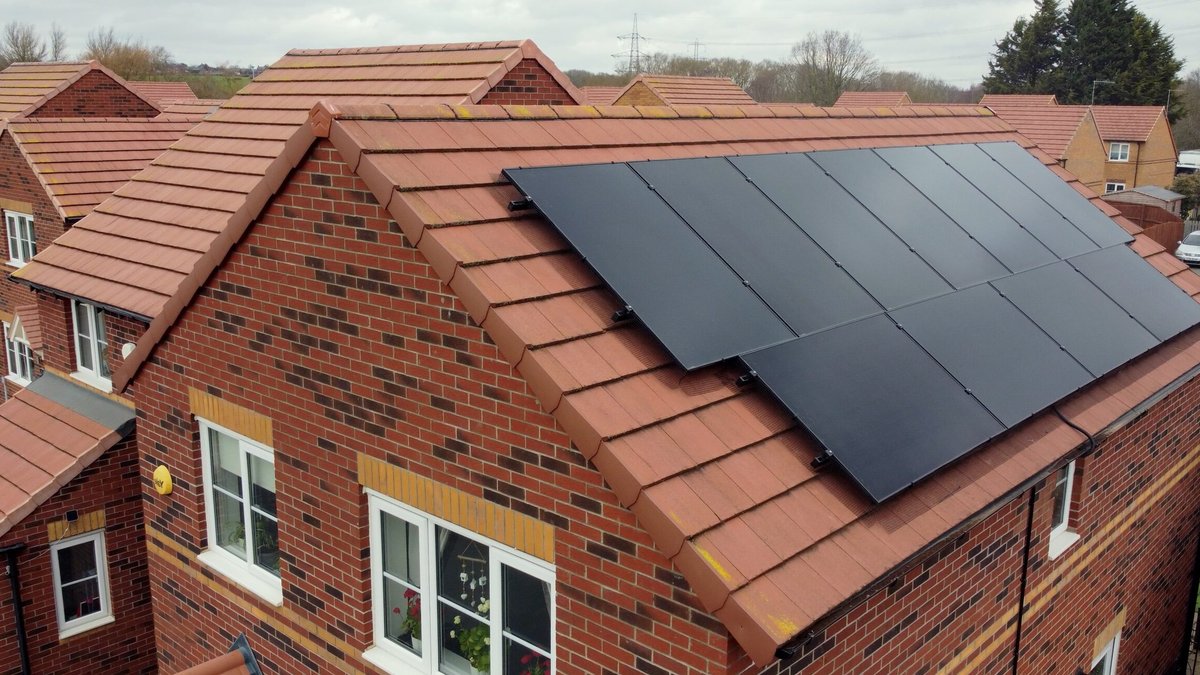
Solar panels are now a familiar feature on British rooftops, yet many homeowners reject the idea for their own properties due to persistent myths. Concerns about roof direction, angle, and property value linger, though recent advances have made solar power practical for more homes than most assume.
The UK’s climate suits solar energy well. Its latitude provides long daylight hours in summer and sufficient diffuse light in winter to keep panels working. Spring and summer account for 71% of a typical system’s annual output, while autumn and winter contribute the remaining 29%.
Modern photovoltaic panels do not require direct sunlight. They generate electricity from daylight, so they remain productive even on cloudy days. Efficiency gains over the past decade have also improved their performance in low-light conditions.
A common misconception is that only south-facing roofs are suitable. While south-facing arrays produce the most electricity annually, east and west-facing roofs can be equally useful. East-facing panels peak in the morning, while west-facing ones continue generating power into the late afternoon, matching typical household energy use patterns.
North-facing roofs are not automatically excluded. Installers might recommend ground-mounted panels or a combination of roof and garden setups to optimize space. Shading from chimneys, dormers, or trees is carefully considered, with systems designed to reduce losses.
Related: Tiny kitchen makes the most of under-stairs nook
Roof angle flexibility
The best roof pitch for UK solar panels ranges between 30 and 45 degrees, aligning with much of the country’s housing stock. Flat roofs need special mounting systems to angle the panels correctly, but these are widely available. Structural checks ensure the roof can support the weight before installation. The approach focuses on adapting the system to the home rather than applying a rigid solution.
Worries about solar panels lowering property values are unfounded. The higher sale price stems partly from improved Energy Performance Certificate ratings, which buyers now prioritize. Lower energy bills and the ability to generate clean power add to the appeal. Current panels are also sleeker and less noticeable than older models, fitting well with most roof designs.
Today’s solar technology is far more adaptable and efficient than earlier versions. A professional assessment is the best way to determine a home’s potential benefits, and the results often exceed expectations.
For those hesitant, the first step is simple: a customized survey. It will outline the best setup, estimate savings, and demonstrate how modern solar can turn a roof into a lasting asset, regardless of its orientation.
Homeowners looking to make the most of their space might also consider other practical upgrades, but solar remains one of the most effective ways to reduce energy costs.


