
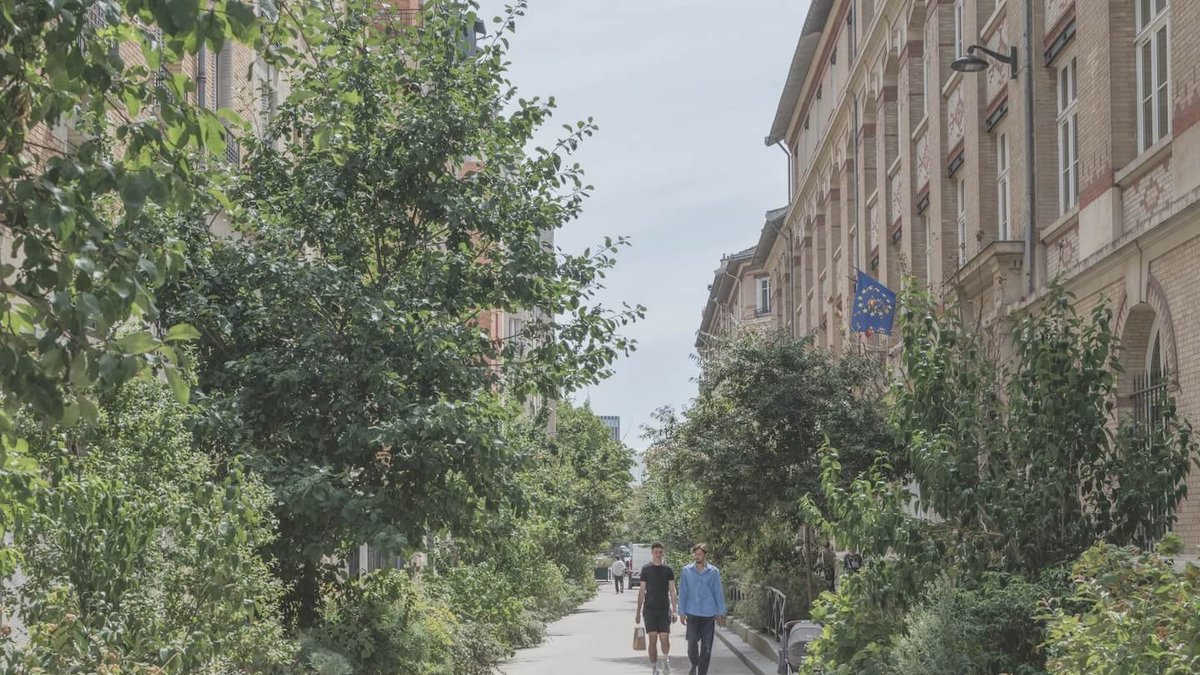
Over the past decade, Paris has undergone a significant transformation, reprioritizing pedestrians and planting thousands of trees to battle climate change and make public areas a priority. The city’s efforts have been led by former Mayor Anne Hidalgo, who implemented the “Oser Paris” plan in 2014, aiming to reduce the space devoted to cars and increase green space.
The transformation is evident in spaces like the Place de Catalogne, a circular area in the 14th arrondissement that was once a grand plaza but is now an urban forest with 470 trees, including oaks, hornbeams, and Montpellier maples. This change has turned a previously hot and inhospitable location into a refuge for people, plants, and wildlife.
Reimagining Public Space
Paris’s approach to public space has been influenced by the 15-minute city model, which aims to make essential services accessible within a short walk or bike ride from home. The city has taken space previously used for cars and reassigned it to trees, soil, cyclists, and pedestrians, resulting in a more sustainable and equitable environment.
According to Brent Toderian, a Vancouver planner and urbanist, Paris’s efforts have been effective in addressing the city’s challenges, including crowded streets, poor air quality, and urban heat. “Greening urban space is one of the most effective things you can do for these challenges,” he says.
The city’s transformation has also involved the creation of new public promenades along the Seine, which was once a heavily polluted waterway. Additionally, the city has carved out two prominent public promenades along the river for pedestrians and cyclists.
On solid ground, the city has created 550 kilometers of new bike routes and removed approximately 50,000 parking spaces, making cycling a more practical choice for residents.
Urban Planning and Design
Paris’s urban planning and design have played a key role in the city’s transformation. The city’s parks agency, DEVE, has carried out numerous projects, including the rebuilding of the Place de Catalogne and the creation of new public spaces. The city has also launched initiatives like the “Rues aux écoles” program, which converts roadways in front of schools to traffic-calmed or car-free zones, and the “Cours Oasis” project, which replaces asphalt school grounds with cooler, more natural areas.
According to Hiba Debouk, an urban planner and engineer, the city’s approach has been to “rationalize space that was given to the automobile” and use it for adaptation to climate change, including planting, thermal comfort, and finding fertile soil. The city’s efforts have been driven by a desire to create a more sustainable and equitable environment, and the results are evident in the city’s transformed public spaces.
The city’s approach has also involved the use of architecture to structure the redevelopment of large swaths of the city. The Grand Parc des Docks de Saint-Ouen, designed by Agence Ter, is a prime example of this approach, featuring flood-management infrastructure, agricultural plots, lawns, and more naturalistic planted areas. The park provides public space around which the new district is organized, demonstrating the city’s commitment to using architecture to create sustainable environments.
The temperature within the new schoolyards can be eight degrees cooler than in traditional schoolyards, according to the city. This is a significant improvement, and it demonstrates the city’s ability to turn environmental objectives into design problems. The schoolyards serve as a prime example of how Hidalgo’s urbanism accommodates several uses at once, including play, outdoor teaching, gardening, sitting, and informal gathering.
As the city continues to evolve, it is clear that the transformation of Paris’s public spaces will have a lasting impact on the city and its residents. With over 300 “Rues aux écoles” completed and more than 200 “Cours Oasis” projects underway, the city is well on its way to creating a more sustainable and equitable environment.
The city’s efforts have been recognized globally, and it is likely that other cities will follow Paris’s lead in the years to come. The city’s parks agency, DEVE, has played a key role in this transformation, and its work will continue to shape the city’s public spaces for generations to come. The number of trees planted in the city has risen to 170,000, and the city’s bike routes now stretch for 550 kilometers.
At Paris City Hall, the transformation is evident, with 50 trees and 20,000 plants replacing concrete. This change reflects the city’s commitment to creating a more sustainable environment.
Lessons from Paris
According to Brent Toderian, the city’s changes are dramatic, even to the eyes of a local. The city has demonstrated what happens when a city continues building through tension, creating a network of cycle lanes, gardens, and public spaces.


