
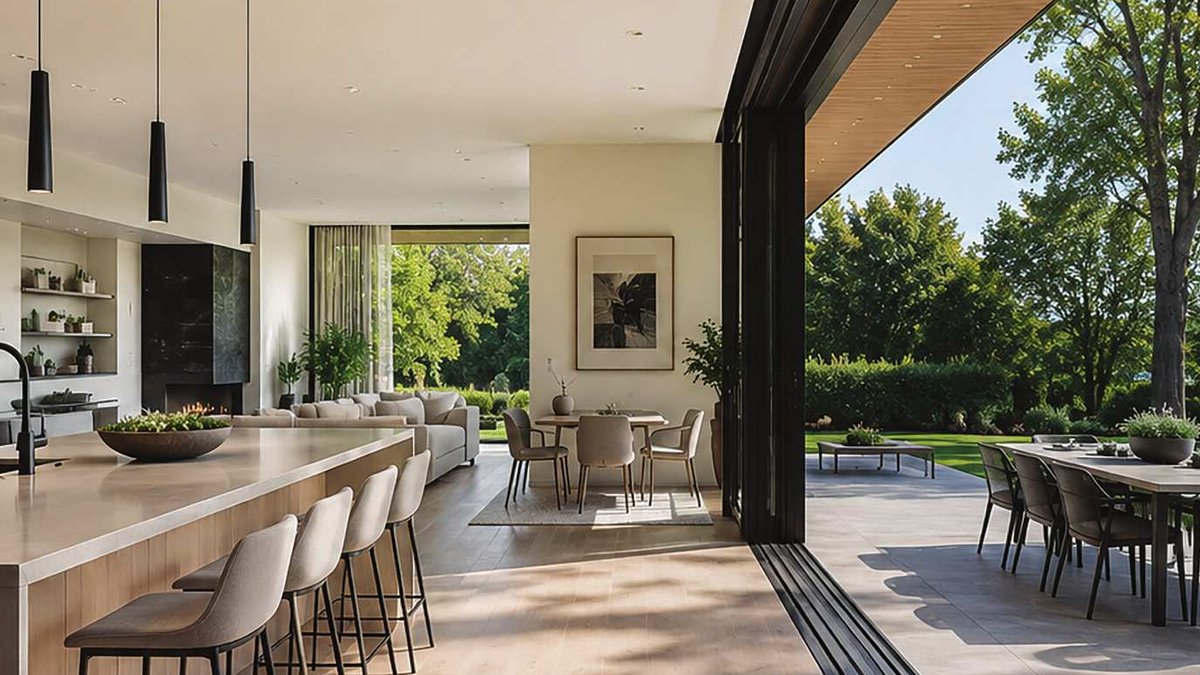
Luxury homes across Ontario are adopting indoor-outdoor living, a design approach that blurs the line between interior spaces and the nearby outdoors.
Glass walls become the new centerpiece
Floor-to-ceiling glazing systems now dominate kitchens, living rooms and dining areas, allowing residents to look directly onto terraces, pools or landscaped yards. These oversized sliding panels can be fully opened in warm weather, creating an expansive feel, or sealed during winter while still preserving a visual link to the outdoors. The result is a bright, open environment that feels both sophisticated and connected to nature.
Architects are moving away from traditional sightlines, opting instead for minimal framing that lets glass dominate the façade. As a result, the window and door units are no longer a finishing touch; they serve as a defining element of the building’s aesthetic. This shift reflects a broader trend toward cleaner lines and larger openings, where the boundary between inside and outside becomes almost invisible.
Manufacturers adapt to new demands
Companies such as Trimark Windows are tailoring their product lines to meet the expectations of indoor-outdoor homes. The firm, a certified fabricator that undergoes annual training, offers high-performance European‑style aluminum window and door systems. These units combine minimalist design with engineering that addresses thermal efficiency, an essential factor given the year‑round exposure to the elements.
Related: Modern Rustic Interiors Continue Captivating Homebuyers
According to the company’s website, the systems are engineered to maintain comfort while delivering the expansive visual experience homeowners desire. The emphasis on thermal performance helps mitigate the energy costs that might otherwise rise from extensive glass surfaces.
From a practical standpoint, the shift toward indoor-outdoor living changes daily routines. Residents can step from a kitchen island onto a patio for a quick coffee without ever closing a door, and families can host gatherings that flow seamlessly between indoor dining and outdoor leisure. This fluidity can enhance the use of outdoor amenities, encouraging more frequent enjoyment of pools, fire pits or landscaped areas.
It’s not just about aesthetics. The design supports a lifestyle that values natural light and fresh air, which can contribute to wellbeing.
Homeowners love the openness.
Related: Creating a quintessential English home look
The move toward indoor‑outdoor living also reflects changing consumer expectations. Buyers increasingly view homes as extensions of their lifestyle, prioritizing spaces that support both relaxation and social interaction. This mindset drives demand for designs that feel less compartmentalized and more harmonious with the surrounding environment.
In practice, the trend means that future homebuyers will likely assess properties not only for square footage but also for the quality of the indoor‑outdoor transition. Real estate listings are beginning to highlight the size and functionality of glass walls, indicating that these features have become a selling point.
Overall, the rise of indoor‑outdoor living signals a shift in how residential spaces are conceived, built and experienced, with glass playing a central role in redefining the modern home.


